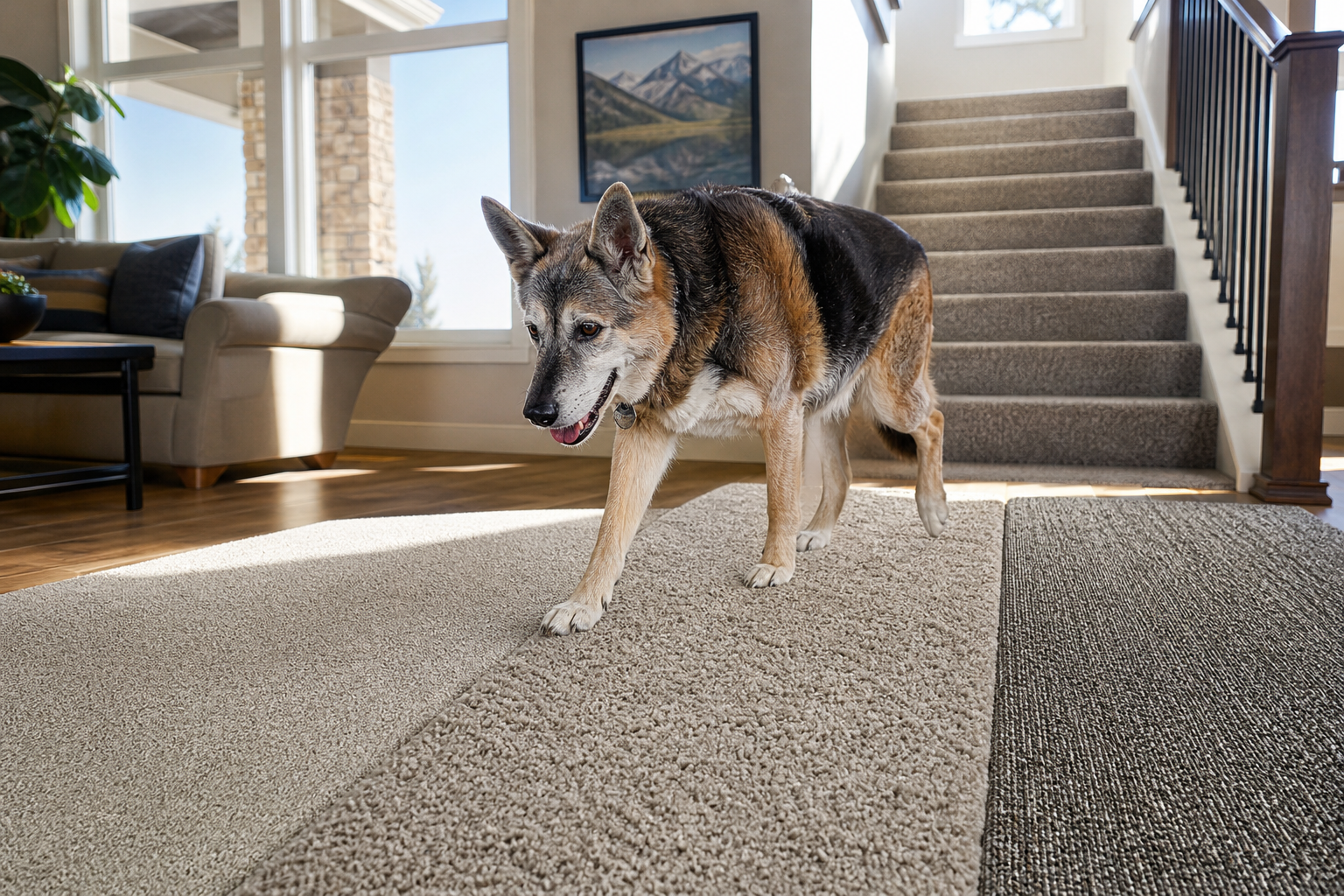
Soft does not automatically mean safe on stairs. The best carpet for stairs is usually a low-pile, dense carpet with strong backing and a proper stair installation, because stairs put more pressure, twisting, and foot traffic on carpet than almost anywhere else in the house.
The best carpet for stairs is a dense, low-pile carpet, usually a textured cut pile, low-profile loop, or patterned carpet, installed with the right cushion and tightly fitted over each tread and riser. It holds up better, feels more secure underfoot, and is less likely to mat, loosen, or feel slippery than thick plush carpet.
What is the best carpet for stairs?
The best carpet for stairs is a low-pile, high-density carpet with durable fiber, firm support underneath, and a clean installation that keeps the carpet tight on every step. For most homes in Colorado Springs, Colorado, that means looking past the softest sample in the showroom and choosing what stays secure after thousands of trips up and down.
I tell homeowners this all the time. Stairs are not the place to shop by hand-feel alone. A carpet that feels great in a display board can crush, loosen, or wear out fast once it is bent over stair noses and hit daily by shoes, socks, paws, and backpacks.
The strongest choices usually have these traits:
- Low to medium pile height
- Dense face weight and tight construction
- Good resilience, often nylon or high-grade polyester depending on use
- Supportive carpet cushion approved for stairs
- Professional stair installation, usually with a tight wrap or cap-and-band method based on the look and carpet style
If you want the short version, the best carpet for stairs is the one that stays tight, grips better underfoot, and wears evenly on the edge of each tread. In busy homes across Monument, Falcon, Fountain, and Security-Widefield, that usually means practical texture over deep plush.
Why do stairs need a different kind of carpet than bedrooms or living rooms?
Stairs need tougher carpet because every step concentrates body weight on a smaller area, especially at the front edge of the tread. That repeated impact makes carpet crush faster, shift more, and show wear sooner than flat floor carpet in most rooms.
A stair tread does three hard things to carpet at once:
- It bends the carpet over the stair nose
- It focuses impact in the same narrow path every day
- It creates more slip risk if the surface is too slick or too cushioned
That is why a carpet that works fine in an upstairs guest room may be a poor fit for a staircase. Thick, fluffy styles often flatten at the nose and can feel less steady underfoot. Loose or tall textures can also hide wear at first, then suddenly look matted.
Colorado Springs families often ask this when balancing pets, kids, and slippery stair traffic.
Local conditions add to the wear. In El Paso County, dry air, grit tracked in from snow, and sand from driveways and sidewalks can act like fine abrasion on carpet fibers. The stair path from entry level to upper floor often takes the worst of it, especially in winter and spring mud season.
Which carpet constructions hold up best on stairs?
The carpet constructions that hold up best on stairs are dense textured cut pile, tightly made low-loop carpet, and many patterned carpets that combine cut and loop in a low profile. These styles resist crushing better and keep a more secure feel than deep saxony or shag.
Here is the practical breakdown I give in our Colorado Springs showroom.
| Carpet style | How it performs on stairs | Best fit | Main caution |
|---|---|---|---|
| Textured cut pile | Very good wear, good footing, hides traffic | Busy family homes, pets, everyday use | Avoid very tall or silky versions |
| Low-profile loop | Excellent durability, clean look | High-traffic stairs, modern homes | Pet claws can snag some loop constructions |
| Patterned cut and loop | Good durability and visual texture | Homes wanting wear resistance plus style | Keep the pattern low and dense |
| Plush saxony | Usually weak on stairs long term | Low-traffic rooms only | Shows footprints, mats quickly |
| Frieze or shag | Poor stair control in many cases | Rarely my first pick for stairs | Can feel uneven and wear awkwardly on edges |
Fiber matters too. The Carpet and Rug Institute provides guidance on carpet performance factors, and in day-to-day use I still see nylon perform especially well on stairs because of its resilience. Good polyester can work too, particularly for stain resistance, but it needs the right density and construction. Fiber alone does not make a stair carpet good or bad.
I have been doing this for more than 40 years, and I have seen plenty of expensive carpet fail on stairs simply because it was the wrong style. The label did not save it. The construction decided it.
In Colorado Springs and nearby communities like Falcon and Monument, many two-story homes funnel daily traffic from garage entry to kitchen to upstairs bedrooms. That repeated route makes staircase wear show up sooner than homeowners expect, especially during snowy months when fine grit and melted slush come inside on shoes.
What carpet styles are poor fits for stairs, even if they feel great in the showroom?
The styles that are usually poor fits for stairs are deep plush, silky saxony, long frieze, shag, and loose loop carpets that can snag or shift. They may feel soft in a sample, but they often wear unevenly, crush faster, or feel less secure on the steps.
Here is the weak versus strong version.
- Weaker choice: a deep, velvety plush with a tall pile that shows vacuum lines and footprints. It looks rich on day 1, then starts to flatten on the front half of each stair.
- Stronger choice: a dense textured carpet with shorter yarn and tighter backing. It may feel less dramatic in your hand, but it usually keeps its shape and traction much longer.
Loose loops deserve special caution for homes with dogs. If you have an aging dog or one that scrambles on stairs, loop construction can be excellent for wear if it is tight and low, but some loop styles give claws something to catch. For a lot of pet homes, a dense textured cut pile ends up being the safer middle ground.
If you are sorting through brand names and tier labels, do not let marketing terms confuse you. Ask what the pile height is, how dense it is, what cushion is approved for stairs, and whether the installer is wrapping or capping the stair. Those 4 questions tell you more than the name on the sample board.
Common mistake: Choosing the thickest pad for extra comfort
A stair carpet needs support, not a pillow effect. Too much cushion can make the step feel less stable, speed up wear at the stair nose, and even work against the carpet warranty. Stair installations usually call for a firmer, thinner cushion than a bedroom does.
What makes a stair carpet feel more secure underfoot?
A stair carpet feels more secure when the pile is lower, the surface is not slick, the cushion is firm enough, and the installation is tight across every tread and riser. Security comes from the full system, not just the carpet sample.
That system includes:
- Dense surface. Your foot sits on the carpet instead of sinking into it.
- Controlled texture. Slight texture can help grip. Overly silky fibers can feel slick in socks.
- Proper cushion. Stair cushion is often thinner and firmer so the tread feels solid.
- Correct installation. Loose carpet, poor seaming, or bad fitting on the nose can shorten life fast.
- Clean stair edges. The front edge of each stair should be tight and crisp, not rounded out by excess bulk.
The National Floor Safety Institute, at NFSI, has long emphasized traction as a core factor in slip safety. In real homes, traction on carpeted stairs is not measured by softness. It is measured by how steady the surface feels on step 10, step 100, and step 10,000.
At O'Briens Carpet One Floor & Home, I would rather steer somebody away from a soft seller today than hear six months later that their stairs already look tired. That is just old-school flooring common sense.
What installation details matter most for stair carpet performance?
The installation details that matter most are the carpet cushion, stair fitting method, seam placement, and how tightly the carpet is attached over the nose of each step. Even the best carpet for stairs can fail early if the installation is sloppy or the cushion is wrong.
Here is what I would pay attention to:
Stair carpet buyer checklist
- Ask if the carpet is specifically recommended for stairs and heavy traffic.
- Ask for pile height and density, not just face weight.
- Confirm the cushion is stair-rated and not too thick.
- Ask how the installer will finish the stairs, full wrap or cap-and-band.
- Check who does the installation, in-house crews or subcontractors.
- Ask what warranty terms could be voided by the wrong cushion or install method.
- Request a full measure so the seam plan is decided before installation day.
Most staircases are installed in 1 day, though larger projects or whole-house jobs can take longer. You usually do not have to move out, but you do want a clear path and a plan for kids and pets during the work. If the old carpet comes off and a subfloor issue shows up, that can affect timing. Good installers catch those problems before new material goes down.
If you want a deeper local breakdown, our article on best carpet for staircases that stays safer and wears longer pairs well with this one. If you are also comparing store experience, our piece on what full service flooring means for Colorado Springs homes explains how measurement, prep, installation, and follow-through affect the finished result.
How do you choose the best carpet for stairs if you have pets, kids, or older dogs?
The best carpet for stairs in a pet or kid-heavy home is usually a dense, textured, lower-pile carpet that gives good footing and hides traffic. For older dogs, avoid slick or overly thick styles that make climbing harder.
For households in Colorado Springs with labs, doodles, kids in socks, and constant stair use, I would focus on these priorities in order:
- Traction on the tread
- Resistance to crushing at the stair nose
- Ease of spot cleaning
- Ability to hide everyday soil between cleanings
- Low snag risk for nails or toys
That often leads to a practical textured carpet in a medium tone. Very dark carpet can show lint. Very light carpet can show tracked-in dirt from Colorado Springs winters. A mid-range color with visual texture usually ages better in real family traffic.
If you are comparing carpet to hard surface nearby, it can help to think through transitions too. For example, a home might use carpet on stairs and upper hall, then hard surface at entries where snow and grit are heavier. Our article on best vinyl plank flooring in Colorado Springs and our look at how laminate handles a Colorado Springs entryway can help if your stair decision is part of a larger remodel.
Frequently Asked Questions
Is loop carpet or cut pile better for stairs?
Both can work, but the better choice depends on the loop size, density, and whether pets are in the home. Tight, low loop carpet can wear extremely well on stairs. Dense textured cut pile is often the safer all-around pick for Colorado Springs families with dogs because it gives good footing without the same snag risk as some loop styles.
How often should stair carpet be replaced?
It depends on traffic, fiber, and installation quality, but stairs usually show wear before other carpeted areas. In a busy home, the staircase can be the first place to age visually within several years if the carpet is too plush or the cushion too soft. A denser stair-appropriate carpet often keeps its appearance much longer.
The best carpet for stairs is rarely the fluffiest carpet in the store. It is the carpet that stays tight, keeps a stable feel underfoot, and still looks good after daily use in a real Colorado Springs household.
If you are still narrowing it down, start by ruling out tall plush and loose styles. Then compare dense low-pile options side by side, ask about stair-rated cushion, and make sure the install plan is as solid as the carpet choice itself. If you want to compare how products are measured, specified, and installed locally, you can also visit https://www.obrienscarpetone.com.
See how we judge stair carpet before it goes in your home
If you are trying to choose the best carpet for stairs in Colorado Springs, we can show you exactly what we look at: pile height, density, stair-rated cushion, seam planning, and how each sample wraps over a stair nose. That way you can see what holds up and feels secure before you make the call.
Book a free in-home flooring measure and consultationExplore more, or reach out directly to O'Briens Carpet One Floor & Home in Colorado Springs, CO.