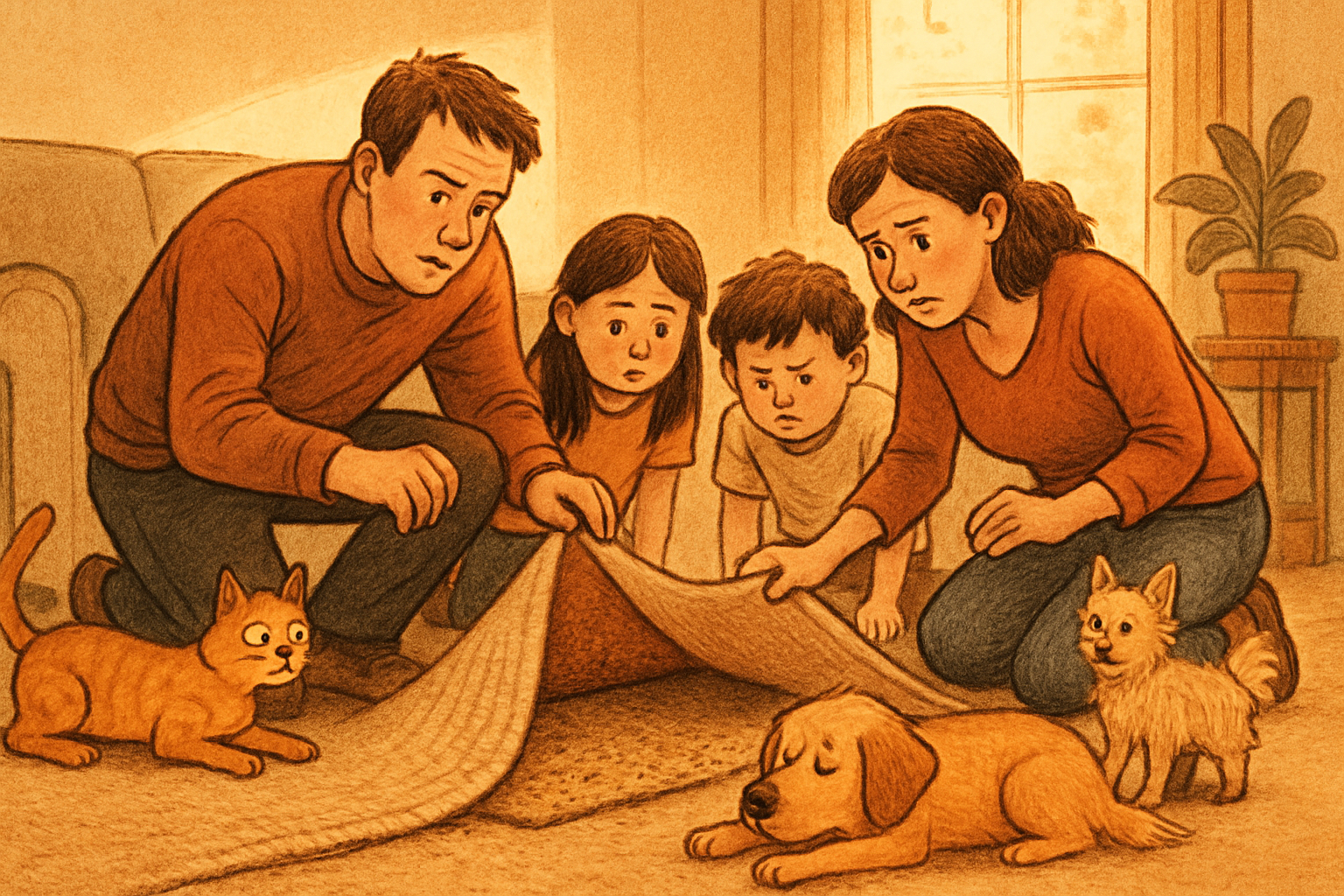
In Colorado Springs, pet odor complaints do not peak only in summer. I hear about them all winter too, especially in entryways, basement stairs, and the one room that stays closed up while snowmelt, slush, and dry furnace air keep cycling through the house. If you are searching pet odor flooring Colorado Springs, the real decision is not simply clean versus replace. It is figuring out whether the smell is still on the surface, or already living in the pad, seams, baseboards, or subfloor underneath.
Yes, pet odors can sometimes be removed without replacing flooring, but only when the odor is limited to surface fibers, residue, or a recent isolated accident. If the smell keeps coming back in winter, after the room warms up, or from one repeated spot like an entryway, that usually means urine or moisture reached the pad, subfloor, or plank edges, and cleaning alone often will not solve it.
Can pet odors be removed without replacing flooring?
Yes, sometimes they can. Cleaning is usually enough when the odor is recent, light, and still in the top layer of the floor. Replacement starts making sense when the smell keeps returning after cleaning or clearly comes from below the visible surface.
At O'Briens Carpet One Floor & Home, I look for depth first. Surface odor from wet fur, dander, tracked-in dirt, or a one-time accident is a different problem from a floor that has absorbed years of repeat pet accidents. If the smell fades for a day or two, then comes back in the same place, that is usually not a cleaning problem anymore.
Here is the practical breakdown:
- Surface odor: fur, body oils, dirt, and minor accidents cleaned quickly.
- Layered odor: contamination in carpet backing, carpet pad, grout, underlayment, seams, or along baseboards.
- Structural odor: repeated urine saturation, staining, swelling, or damage in wood-based subfloors.
The U.S. Environmental Protection Agency notes that biological contaminants and indoor pollutants can build up in soft materials and enclosed spaces. That is why a room can smell clean right after treatment, then smell sour again once the house closes up or warms up.
Why does pet odor in carpet come back in winter in Colorado?
In Colorado, winter odor usually returns because old contamination reacts to dry indoor heat, tracked-in moisture, and a house that stays closed more often. The smell is not newly created. It is being reactivated.
This is one of the most common things I hear from local homeowners. They think the problem should be better in winter because Colorado is dry. But here is what often happens instead. Snowmelt and slush collect at the entryway, dogs come in with damp paws, the furnace runs, windows stay shut, and an older pet spot in the carpet pad or subfloor starts releasing odor again.
In practical terms, winter rebound usually comes from 4 local conditions:
- Closed-house season. Less fresh air exchange means smells hang around longer.
- Furnace heat. Warm air can make old urine residue more noticeable.
- Snowmelt at the door. Moisture from boots and paws can reactivate contamination near entries.
- Colorado humidity swings. A dry week followed by a wet storm can make hidden odor seem to appear out of nowhere.
A weaker explanation is telling yourself the carpet just needs one more deodorizer. A stronger explanation is that winter exposed a problem that was already in the lower layers.
Here in Colorado Springs, entryways off the garage and front door are frequent trouble spots from December through March. Homes in Briargate, Fountain, Monument, and Security-Widefield often see the same pattern. A damp dog comes in from snow or mud, then lays in the same traffic path every day. That combination is hard on carpet and even harder on laminate edges and underlayment.
How do carpet, pad, subfloor, and hard-surface floors behave differently with pet odor?
They behave very differently, and that is what should drive the decision. Carpet can hold odor in the fibers and backing. Pad holds liquid. Subfloor can hold odor for years. Hard-surface floors clean up better on top, but seams and edges can still trap moisture below.
This is the comparison I use with homeowners weighing pet odor flooring Colorado Springs options:
| Floor Layer or Type | How Odor Gets In | When Cleaning May Work | When Replacement Often Makes Sense |
|---|---|---|---|
| Carpet fibers and backing | Accidents, dander, oils, repeated moisture | Recent accidents, mild odor, isolated spots | Strong odor after 1 to 2 professional cleanings, repeat staining |
| Carpet pad | Liquid passes through carpet and soaks pad | Rarely, unless the spot is very small and caught quickly | Persistent odor, old accidents, damp or discolored areas |
| Wood or composite subfloor | Long-term seepage and urine saturation | Sometimes with sealing after upper layers are removed | Black staining, swelling, softness, delamination, repeated odor return |
| LVP or laminate seams | Moisture enters gaps, underlayment, perimeter edges | Surface spills that stayed on top | Odor from below, edge swelling, trapped moisture |
| Tile and grout | Grout absorption, residue around pet zones or toilets | Often, with deep grout cleaning and sealing | Loose tile, cracked grout, damaged substrate underneath |
If you are choosing between cleaning and replacement, the hidden layer matters more than the visible finish. Most families do not need the most expensive floor. They need the right diagnosis.
What signs tell you cleaning is enough, and what signs point to replacement?
Cleaning is enough when the problem is recent, light, and not concentrated in one repeat location. Replacement is more likely when the odor returns within 24 to 72 hours, gets stronger with heat, or is tied to visible damage below the surface.
These are the signs I would weigh first:
- The accident was recent. Think hours or a few days, not months or years.
- The smell is diffuse, not concentrated. General pet smell is easier to treat than one hot spot.
- No visible pad or subfloor damage. No dark staining, no softness, no swelling.
- No repeated history in the same location. One-time issue is very different from a favorite pet corner.
- The odor does not return quickly. If it is back in 24 to 72 hours, the source is usually deeper.
- Hard-surface edges look stable. No curling, peaking, or swollen laminate edges.
- You have not already paid for multiple failed treatments.
The American Pet Products Association reports that 66 percent of U.S. households own a pet. That is why this issue is so common, and why people often spend $200, $300, even $500 chasing a cleaning answer for a replacement problem.
Clean or replace? A quick homeowner checklist
- The odor started after a recent isolated accident, not a long pattern.
- The smell is strongest on the surface, not rising from one corner or seam.
- You do not see recurring stain shadows after drying.
- The carpet pad has not been saturated, or the planks have no swollen edges.
- The entryway or pet zone has not been hit repeatedly through more than 1 season.
- You have not yet tried a true professional odor treatment or inspection.
- The same room does not keep smelling worse every winter or every warm afternoon.
What about entryways and other high-risk spots in Colorado Springs homes?
Entryways are some of the most misleading odor areas in a house. They collect pet moisture, outdoor dirt, de-icer residue, and repeated traffic, so what smells like a simple dirty-carpet issue can actually be contamination in the pad or under the edge of adjacent hard-surface flooring.
I pay close attention to:
- garage entries
- back doors to the yard
- basement stair landings
- kennel corners
- hallway turns where a dog lays down every day
In those areas, odor can be a combination problem, not just urine. Wet fur, road grit, hard-water residue from mopping, and repeated dampness all build up. If you are trying cleaning first, proper spot treatment matters. Our guides on how to remove carpet stains without making them worse and carpet stain removal are good starting points for surface issues.
If you are replacing flooring in a basement room after odor problems, moisture still has to be checked before anything new goes down. That is exactly why concrete moisture testing matters before new basement flooring.
I have seen plenty of homeowners replace only the visible floor at the entry, then call back because the smell was really in the pad strip or underlayment at the threshold.
What type of new flooring makes the most sense after a pet odor problem?
The best replacement floor is the one that fits how your household actually lives and makes future cleanup easier. If odor control is part of the goal, focus on the full assembly, not just the top layer you can see.
For many pet odor flooring Colorado Springs projects, that means thinking through the room by room use:
- Carpet: still a good fit in some bedrooms and living areas if the pet issue was isolated and the new cushion choice is smarter. Cushion matters more than people think.
- Luxury vinyl plank: often a practical choice for busy family areas and pet paths because cleanup is easier on the surface. Installation detail still matters at edges and transitions.
- Tile: strong for entryways, laundry rooms, and obvious pet zones, especially where snowmelt and muddy paws are routine.
- Hardwood: attractive, but repeated moisture still needs quick cleanup, especially in our dry climate where movement and seasonal gaps are already part of the conversation.
If you are still sorting out what holds up best with traffic, pets, and Colorado weather, start with O'Briens Carpet One Floor & Home and compare the room use first, not just the sample board. If softer surfaces are still on the table, our article on choosing a better carpet padding upgrade in Colorado Springs helps explain why odor control and comfort are often tied to what is underneath.
John Hughes's Insights
I have been doing this for more than 40 years, and I still think homeowners deserve the straight story. A lot of people call us embarrassed about pet odor, especially if it is in one room guests notice first. I do not look at it that way. I look at where the smell is coming from and what will actually fix it. If a good cleaning buys you 2 or 3 more years, I would rather tell you that than sell you a floor you do not need. But if the pad is soaked or the subfloor is holding odor, I am not going to pretend another spray bottle is the answer. Around Colorado Springs, especially in winter and mud season, entryways and favorite pet spots tell the truth fast. Pull back the layer, inspect it, and make the decision once.
Frequently Asked Questions
Can professional pet odor removal in Colorado Springs work without new flooring?
Yes, if the odor is limited to surface fibers, residue, grout, or a recent isolated accident. If the smell has reached the carpet pad, underlayment, subfloor, or plank seams, professional treatment may improve it but often will not finish the job on its own.
Why is the smell strongest in the entryway?
Entryways take repeated wet paw traffic, snowmelt, mud, salts, and dirt from outside. That moisture can reactivate older contamination and push odor into carpet pad, thresholds, or the edges of laminate and vinyl installations.
Can a subfloor be sealed instead of replaced?
Sometimes. If the subfloor is structurally sound, sealing after the contaminated carpet and pad are removed can help contain remaining odor. If the subfloor is soft, swollen, blackened, or delaminating, replacement of damaged sections is usually the better call.
"Most families are not asking for perfection. They just want to stop wasting money on the wrong fix." John Hughes
Need help deciding if pet odor flooring replacement is actually necessary?
If you are trying to figure out whether cleaning is enough or it is time to replace the floor, we can inspect the affected area, help identify which layer is holding the odor, and take this exact decision off your plate. Get a free estimate with O'Briens Carpet One Floor & Home.
Request your free flooring estimate