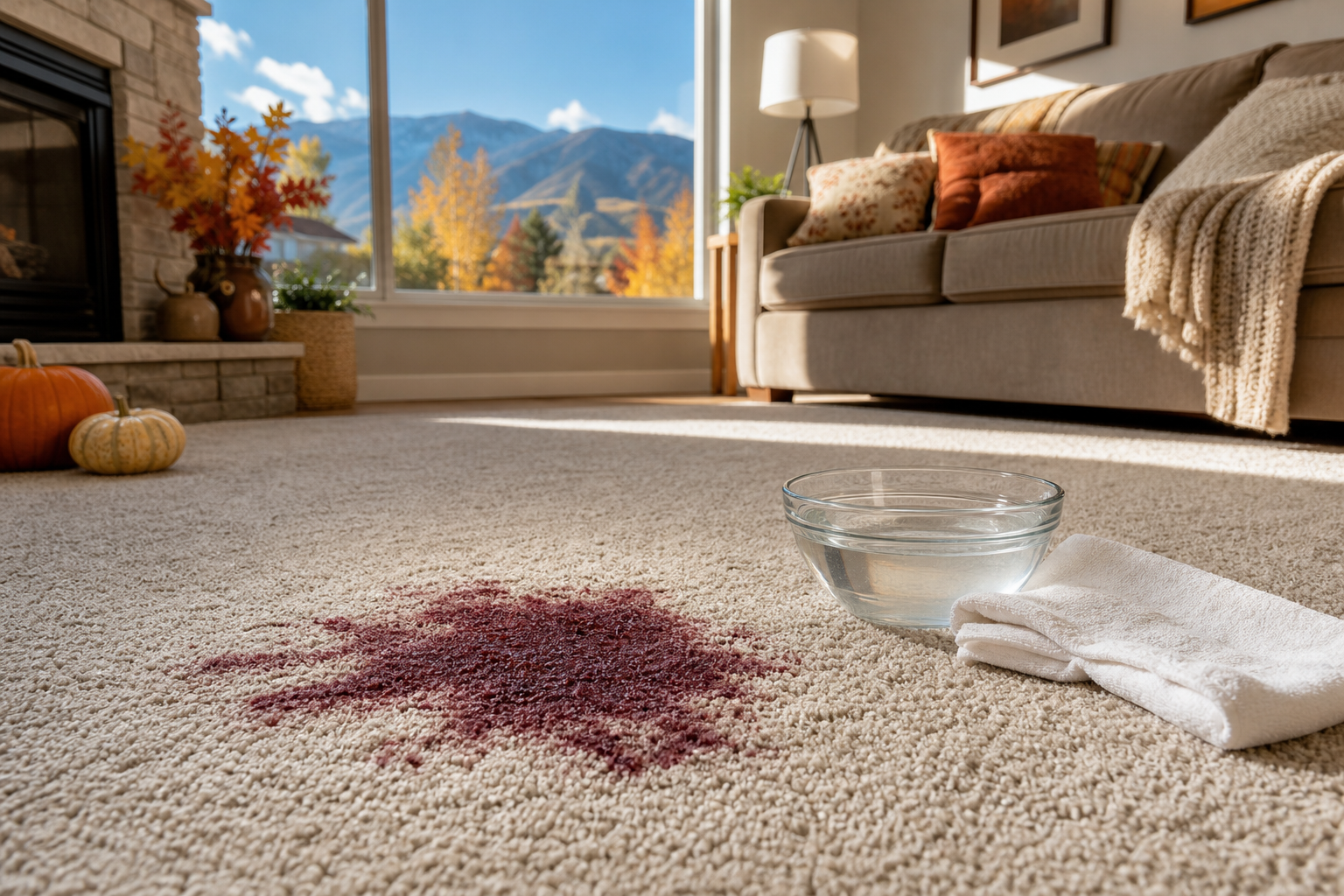
How do you remove carpet stains? Start by blotting fast, identifying what caused the stain, and using the mildest cleaner that fits that stain type. The biggest mistake I see in Colorado Springs homes is scrubbing too hard or using the wrong product, which can spread the stain, damage the carpet fibers, or lock the spot in for good.
To remove carpet stains without making them worse, blot. Do not scrub. Treat water-based stains with small amounts of water and mild detergent, treat oily stains with a carpet-safe solvent or spot remover, and always test first in a hidden area. Speed matters. A fresh stain is often removable in 5 to 15 minutes, but a stain left to dry can become permanent.
How do you remove carpet stains?
You remove carpet stains by acting quickly, blotting from the outside in, and matching the cleaning method to the stain itself. If you remember only one thing, remember this. The right method for coffee is not the right method for grease, pet urine, blood, or red juice.
In a busy house, especially with kids, dogs, and our mix of tracked-in dirt, snowmelt, and pet messes around Colorado Springs, most stains fall into 2 broad groups:
- Water-based stains, like coffee, soda, mud, juice, and many food spills.
- Oil-based stains, like grease, makeup, cooking oil, and some inks.
Use this order every time:
- Pick up solids with a spoon or dull edge.
- Blot liquids with plain white towels or paper towels.
- Work from the outer edge toward the center.
- Use a small amount of the right cleaner.
- Blot again until the transfer slows.
- Rinse lightly if the product calls for it, then blot dry.
- Weight the area with a dry towel for 15 to 30 minutes.
Most homeowners do not ruin carpet with the stain itself. They ruin it with panic cleaning.
What should you do in the first 5 minutes before a stain sets?
In the first 5 minutes, remove excess material, blot gently, and keep the stained area as small as possible. Do not soak the carpet, and do not start scrubbing with a brush.
Here is the fast-response version I would use in my own house:
- Use white cloths only. Colored towels can transfer dye.
- Press down firmly for 5 to 10 seconds at a time instead of rubbing.
- Change to a clean part of the towel every few blots.
- If the spill is muddy, let thick mud dry first, then vacuum before spotting.
- If the spill is urine or milk, move quickly. Organic spills can leave both a stain and an odor.
What cleaning method matches each stain type?
The best stain removal method depends on whether the stain is water-based, oil-based, protein-based, or tannin-based. If you use a strong degreaser on a simple drink spill, or hot water on blood, you can make the mark harder to remove.
How should you treat water-based carpet stains?
Water-based stains usually respond to blotting, cool or lukewarm water, and a small amount of mild dish soap. These are the easiest stains to save if you catch them early.
Examples include soda, washable marker, light mud, juice, and many food drips. Mix about 1 cup of water with a few drops of clear dish soap. Apply it to the towel, not directly to the carpet, then blot. Repeat 3 to 6 times if needed.
How should you treat oil-based or greasy carpet stains?
Oil-based stains need less water and a product meant to break down grease. Water alone usually smears them and drives them deeper.
Examples include lotion, makeup, cooking oil, butter, and garage grime tracked in from a shoe. Use a carpet-safe spot remover labeled for grease or solvent-soluble soils, and use very little. Too much product can leave residue that attracts more dirt over the next 7 to 14 days.
Weak approach: pour hot water on a greasy spot and scrub with a kitchen sponge.
Strong approach: blot first, apply a small amount of carpet-safe solvent to a cloth, dab the stain, then blot dry and repeat as needed.
Colorado Springs entryways take a beating in winter and spring. Snowmelt from boots, de-icing residue, and red-brown dirt from El Paso County lots often create combination stains, part water-based, part oily soil. In places like Monument and Falcon, I often see homeowners over-wet those spots and turn a manageable stain into a larger traffic mark.
How should you treat blood, pet messes, and other protein stains?
Protein stains need cool water, not hot. Heat can set blood, vomit, and some food proteins into the carpet.
For blood, blot with cool water first, then use a cleaner made for protein stains if needed. O'Briens has a more specific guide on how to get blood out of carpet if that is the stain you are dealing with.
For pet urine, blot aggressively with dry towels first. Then use an enzymatic cleaner made for pet accidents. The EPA notes that cleaning products should be used according to label directions, and that matters here. Mixing products or overusing them can create residue and odor problems.
Stain-by-stain do and do not checklist
- Coffee or tea: Do blot fast and use mild soap. Do not scrub in circles.
- Red juice or wine: Do blot and repeat with small amounts of cleaner. Do not pour club soda over the whole area.
- Grease: Do use a carpet-safe grease remover sparingly. Do not flood with water.
- Mud: Do let heavy mud dry, then vacuum first. Do not smear wet mud deeper.
- Blood: Do use cool water. Do not use heat.
- Pet urine: Do absorb as much as possible and use an enzyme product. Do not mask it with fragrance sprays.
What mistakes lock carpet stains in place?
The most common mistakes are scrubbing, over-wetting, using the wrong cleaner, and leaving residue behind. All 4 can make a stain larger, wick it back up from the pad, or strip texture from the carpet pile.
Scrubbing is the mistake that causes the most damage
Scrubbing frays carpet fibers, spreads the stain outward, and can create a fuzzy patch that still looks dirty even after the color is gone. Blotting may feel slower, but it preserves the face fibers and keeps the stain contained.
Here are the other big ones:
- Using too much soap. Soap residue grabs new dirt quickly.
- Using bleach or harsh laundry products. These can remove dye permanently.
- Over-wetting the carpet. Moisture can sink into the pad and wick back in 24 to 48 hours.
- Using steam or hot water on the wrong stain. Heat can set protein stains and some dyes.
- Skipping a test spot. Even a good product can affect color on some carpets.
Myth: If a stain does not come out right away, stronger cleaner and harder scrubbing will fix it.
Reality: Past a certain point, stronger chemistry and more force usually do more harm than good. Some stains are no longer on the fiber surface. They have dyed the fiber, reacted with the backing, or soaked into the pad. At that stage, professional treatment, a bonded insert, or replacement is the honest answer.
Can the carpet still be saved, or is the stain permanent?
Some stains can be fully removed, some can be improved, and some have already changed the carpet permanently. The honest answer depends on the stain source, the fiber type, how long it sat, and what has already been poured on it.
In my experience, these are better odds for saving:
- Fresh spills treated within 5 to 15 minutes.
- Water-based spills on stain-resistant carpet.
- Single-surface spots that have not reached the pad.
These are tougher:
- Pet urine that soaked through and dried for 24 hours or longer.
- Bleach, acne medicine, plant fertilizer, or harsh chemicals.
- Old stains that have been scrubbed 2 or 3 different ways already.
- Burns, melted fibers, or traffic-lane darkening mistaken for staining.
A lot of people search how do you remove carpet stains when what they are really dealing with is fiber damage or color loss. Those are different problems. Cleaning cannot put carpet dye back.
| Situation | Usually worth spot treating? | May need patching or replacement? |
|---|---|---|
| Fresh coffee spill | Yes | Rarely |
| Grease tracked in from garage | Yes | Sometimes, if heavily smeared |
| Old pet urine with odor in pad | Sometimes | Often, in severe cases |
| Bleach spot | No, cleaning will not restore color | Often |
| Burn or melted synthetic fiber | No | Usually |
If your carpet is older, matted, or showing repeated stain issues in high-use zones like stairs or a family room, it may be worth comparing repair effort against replacement. If that is your situation, our guide to best carpet for stairs that holds up and feels secure can help you think beyond the immediate stain.
John Hughes's Insights
I have been around carpet for more than 40 years, and I can tell you most stain problems are decided in the first few minutes. People get nervous, grab the strongest cleaner under the sink, and go after the spot like they are sanding a board. That is usually what turns a small spill into a permanent ugly patch. I would rather see you blot patiently with the right product three times than scrub hard for 30 seconds. And I will be straight with you. Some stains are not cleaning problems anymore. If bleach took the color out, or pet urine sat long enough to get into the pad, I am not going to pretend a miracle spray will fix it. The customer always comes first, and sometimes the right advice is telling the truth about what can be saved.
What if you want a carpet that gives you a better chance next time?
Some carpets clean up easier than others, especially in homes with dogs, kids, and heavy traffic. If you are asking how do you remove carpet stains because this keeps happening, the long-term answer may be choosing a more forgiving carpet fiber and construction.
Nylon and modern stain-treated carpets generally give homeowners better odds than older, lower-grade products. Dense construction matters too. It can help keep spills from spreading as fast. If you are comparing options, O'Briens has information on carpet flooring built for easier cleanup and a broader carpet stain removal resource.
I have said this for years in the showroom. The best carpet for a real family is not the one that looks perfect on day 1. It is the one that still looks decent after 1,000 ordinary messes.
Need help figuring out whether that stain can be saved?
If the spot is spreading, wicking back, or you suspect the carpet is past simple cleaning, we can help you sort out the honest next step, from stain-resistant carpet options to replacement planning for the rooms that take the most abuse in Colorado Springs. We handle the hard part of evaluating damaged carpet and what to do next. Talk with a local flooring expert at O'Briens Carpet One Floor & Home