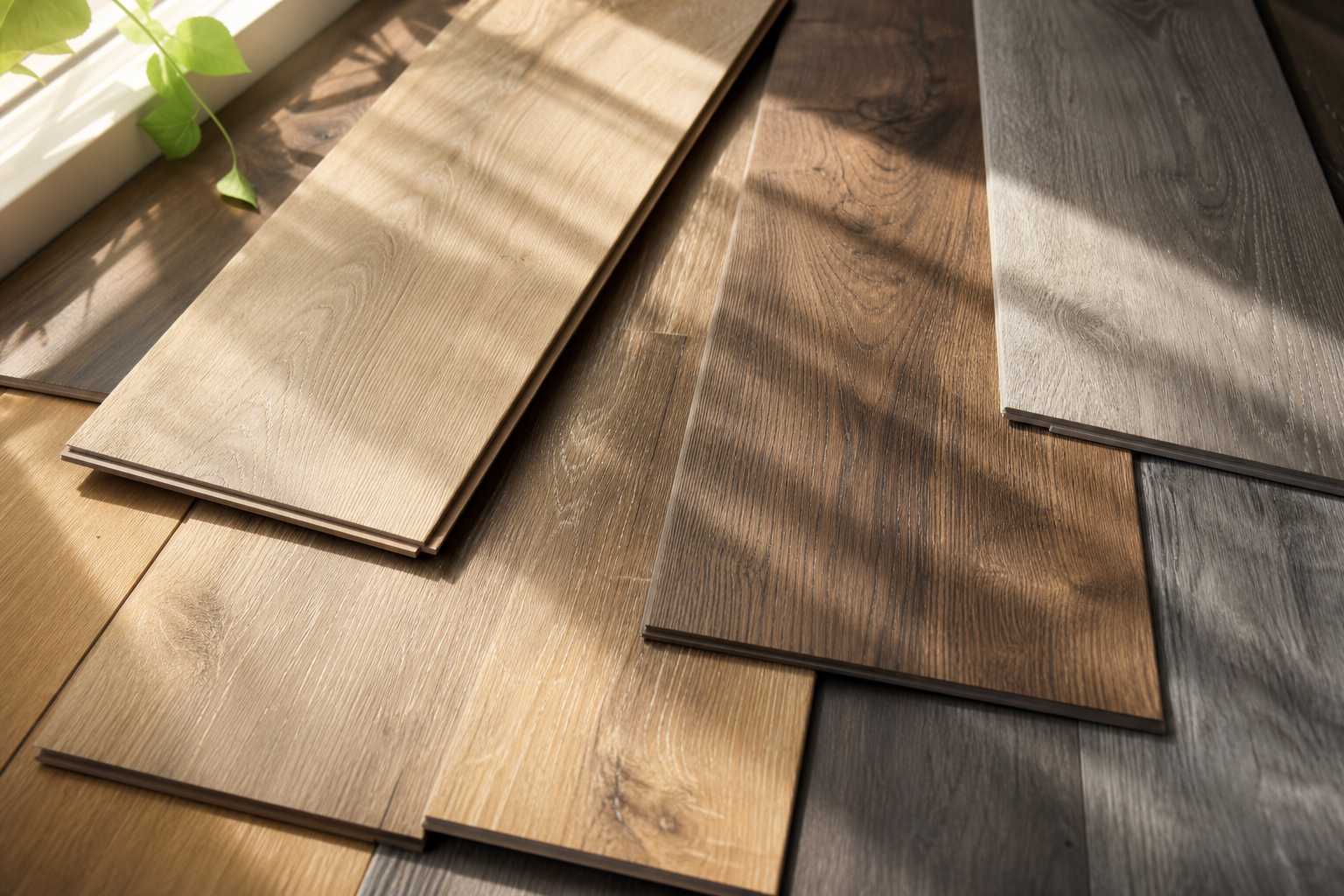
On a bright Colorado Springs afternoon, a lot of LVP samples look good for 30 seconds. Then you put 12 or 20 boards together near a window, and one floor suddenly looks printed while the other starts to read like actual wood. That difference usually has less to do with the price tag than people think. It comes from how the grain image, surface texture, plank variation, edge detail, and installation layout work together across the whole room.
What makes luxury vinyl plank look more like real wood? A realistic luxury vinyl plank has texture that follows the printed grain, enough unique board visuals to avoid obvious repeats, natural color variation, believable plank size, subtle edges, and a layout that breaks up duplicates. If one of those pieces is off, the floor often starts to look less like wood and more like a pattern.
What makes luxury vinyl plank look more like real wood?
A more convincing wood look comes from visual coordination, not one premium feature. The best realistic luxury vinyl plank usually gets 5 things right at the same time: embossing, pattern variation, color movement, edge treatment, and layout.
That is the direct answer for anyone searching phrases like “lvp flooring that doesn't look like wood,” “vinyl flooring that doesn't look like wood,” or “vinyl plank flooring that doesn't look like wood.” If you want LVP that looks more like real wood, judge the floor the way you would judge a full installed room, not a single sample chip.
- Embossing in register. The texture lines up with the grain image.
- Lower repeat visibility. You do not keep seeing the same knot every 6 or 8 boards.
- Board-to-board variation. Some planks run lighter, darker, cleaner, or more active.
- Believable dimensions. Width and length fit the wood style being copied.
- Edges and layout that stay subtle. The floor reads as boards, not a stamped grid.
I tell customers this every week at our Colorado Springs stores on Garden of the Gods Road and North Academy. A more expensive floor can still look less convincing if the repeats are obvious or the texture does not match the print.
Why do some LVP floors look fake even when the color is good?
They usually look fake because the visual details stop agreeing with each other. A nice color cannot hide flat texture, repeated board faces, or bevels that outline every plank.
This is where buyers get tripped up. They see a warm oak tone they like, then assume the floor will look natural once installed. But realism is not just color. It is how light hits the texture, how often duplicate visuals reappear, and whether the floor feels random enough to mimic wood.
A weaker example is a medium-oak plank with a good print but a generic all-over texture and only a handful of repeating faces. A stronger example is a similar color with grain-synced embossing, moderate variation, and enough unique visuals that duplicates spread out instead of clustering.
Common mistake: buying off a single hand sample
A 7-inch by 12-inch sample can hide almost every weakness. Repeats, shiny bevels, and flat texture usually show up only after 200 to 500 square feet are installed. In Colorado Springs, our strong sun and high-altitude light make those artificial details easier to spot, especially in south-facing rooms.
How does embossing change whether vinyl plank flooring looks like wood?
Embossing changes the look by controlling how the surface catches light. The most realistic luxury vinyl plank uses embossing that follows the printed grain closely enough that your eye reads one natural surface instead of a photo with texture pressed on top.
This detail matters more than many buyers realize. In morning light, especially in homes with big windows in areas like Briargate, Flying Horse, or Monument, generic texture can make a floor look plastic fast. Grain-synced embossing gives the floor a more wood-like shadow pattern and a less uniform sheen.
According to the Floor Covering Installation Contractors Association, finished appearance depends on both product characteristics and installation practices. That fits what we see in the showroom. A realistic luxury vinyl plank has to look right before it ever goes on the floor.
Colorado Springs homes deal with intense sun, dry air, snowmelt at entryways, and lots of open-concept layouts. Those local conditions do not just affect performance. They make artificial sheen, repeated visuals, and dark bevel lines easier to notice than they might be in a smaller, dimmer room.
Why do repeat patterns make LVP that doesn't look like wood easier to spot?
Repeat patterns give printed flooring away because real wood is naturally irregular. If the same dramatic knot or mineral streak keeps showing up, your eye locks onto the repeat and the illusion breaks.
This is one of the first things I would check if someone told me they want vinyl plank flooring that doesn't look like wood in a bad, obviously fake way. Ask how many unique plank visuals are in the collection. You may hear terms like faces, repeats, or unique boards.
As a practical guide:
- Collections with 6 to 8 faces can show repeats sooner in large rooms.
- Collections with 12 faces usually spread duplicates better.
- Collections with 16 or more faces often look more natural in open areas, assuming the color and embossing are also good.
That does not mean a floor with fewer visuals is automatically bad. It means you need to inspect it over a larger sample area. Most people do not have a flooring problem. They have a sample-size problem.
The National Wood Flooring Association is useful here because real wood itself varies in grain, mineral streaking, knots, and color from board to board. LVP does not need to copy every mark, but it does need enough variation to avoid feeling machine-repeated.
Do wider and longer planks always make LVP look more realistic?
No. Wider and longer planks only look more realistic when the grain scale, pattern spacing, and edge detail support that size. If the board format is oversized for the print, the floor can look exaggerated instead of natural.
I have seen 9-inch by 72-inch boards look impressive on a rack and less believable once installed in a normal family room. I have also seen a 7-inch plank look far more natural because the grain and variation were scaled better. That is why realistic luxury vinyl plank has to be judged as a system, not a single spec.
| Design Detail | Weaker Visual Result | Stronger Visual Result |
|---|---|---|
| Embossing | Generic texture unrelated to grain | Texture aligned with the grain image |
| Pattern count | Duplicate boards show up often | Repeats are spread out and harder to catch |
| Color movement | Flat, same-tone appearance | Natural board-to-board tonal change |
| Edge treatment | Dark grooves outlining every plank | Subtle definition without a stamped grid look |
| Layout | Stair-step or H-pattern effect | Randomized stagger that breaks visual repetition |
How do edge treatment and color variation affect a realistic luxury vinyl plank?
Edge treatment and color variation control whether the floor reads as individual boards or a repeating pattern. The best-looking floors usually have subtle edges and controlled variation, not perfectly uniform color and not overdone contrast.
Too little variation can look flat. Too much can feel busy and overly designed. Real wood usually sits in the middle. The same is true for LVP that wants to imitate it well.
- Square edge works for a cleaner, quieter visual.
- Micro-bevel can add depth without drawing a hard line around every plank.
- Heavy or dark bevels can make the whole room look more manufactured.
If the room already gets strong light, I am usually cautious about flashy bevels. In Colorado Springs, bright west-facing and south-facing rooms are unforgiving.
For buyers balancing looks with everyday wear, our article on Lyrus flooring for busy homes with pets and kids is worth a look because durability matters too, but visual quality still deserves its own checklist.
Myth: The highest-priced LVP is automatically the one that will look most like real wood.
Reality: Price can reflect thickness, attached pad, brand positioning, warranty length, and construction features. A more realistic look usually comes from better embossing, more unique plank visuals, better-controlled variation, and a cleaner layout. I have seen mid-priced collections outshine more expensive ones for pure realism.
Why does seeing a larger sample area matter so much before buying?
A larger sample area matters because realism is judged across repetition. You need enough planks together to see duplicate faces, color balance, bevel lines, and how the texture reacts under real light.
The World Floor Covering Association advises buyers to inspect flooring for visible variation in color and pattern before installation. That sounds simple, but it is still where many disappointments begin. People approve a pretty sample, then dislike the floor after the full install exposes the pattern.
At our stores, I would rather spend an extra 15 minutes comparing bigger sample layouts than have someone live with a floor they never quite liked. Old-school advice still works.
If your project includes a basement or slab area, appearance is not the only thing to check. Moisture conditions matter too, and our article on why concrete moisture testing matters before new basement flooring in Colorado Springs explains why that step should happen before the order is final.
Checklist for choosing vinyl flooring that looks more like real wood
- View 12 to 20 boards together, not one small sample.
- Ask how many unique plank visuals are in the collection.
- Stand back 8 to 10 feet, then inspect from about 2 feet.
- Look at the floor in direct light and indirect light.
- Check if the texture follows the printed grain.
- Study the bevel for dark grid lines or shiny outlines.
- Compare at least 2 or 3 collections side by side.
- Ask how the installer will mix cartons and separate duplicate boards.
Can installation layout make the same LVP look better or worse?
Yes. Installation layout can improve or hurt the exact same product. A careful layout reduces obvious repeats, avoids mechanical end-joint patterns, and makes the floor feel more naturally random.
This is where product choice meets craftsmanship. According to the Floor Covering Installation Contractors Association, appearance issues are often tied not just to material selection but to layout and installation discipline. In plain terms, a good floor still needs a smart install.
- Open multiple cartons and mix boards before laying rows.
- Separate duplicate prints instead of letting them cluster.
- Vary end joints so the floor does not create stair-step lines.
- Check the main sight line from entries, hallways, and seating areas.
- Adjust row planning in large connected rooms where repeats show more easily.
If you want to compare products in person or line up a measure, you can start through O'Briens Carpet One Floor & Home. And if the project includes real hardwood elsewhere in the house, our guide to removing winter grit from hardwood floors in Colorado Springs is useful for side-by-side material planning.
John Hughes's Insights
I have been doing this for more than 40 years, and I still believe the smartest flooring buyers are the ones who slow themselves down. If a floor only looks good in a small sample, that is not enough for me. I want to see what happens when 12, 15, or 20 boards are laid out together, because that is when the truth shows up.
Here in Colorado Springs, we get bright sun, open rooms, snow tracked in at the front door, and busy family houses that do not hide much. A floor that looks convincing in those conditions usually earned it. My advice is simple. Compare the floor, not the sales tag. Ask to see larger sample areas. Ask about repeat patterns. Ask who is planning the layout. Those questions will tell you more than a fancy product name ever will.
How should you choose the best visual value if several LVP collections look close?
The best visual value usually comes from spending on the details you actually notice after installation. Start with realism, then verify performance, then weigh budget.
- Judge the installed look first. Which floor looks most natural across a larger sample?
- Check texture second. Does the embossing match the grain?
- Ask about faces third. How many unique visuals are there?
- Study edges fourth. Do they define boards quietly or create a dark grid?
- Discuss layout fifth. How will duplicate boards be separated during installation?
If you are also comparing other categories for value, our article on upgrading floors on a budget with modern laminate can help you weigh another route honestly. And for homes with heavy pet traffic, our piece on best flooring for multiple dogs adds the durability side to the conversation.
"A realistic floor is usually a series of small right decisions, not one expensive decision." John Hughes
Need help comparing which LVP actually looks like real wood?
If sorting through sample boards, repeat patterns, bevels, and layout details feels like one more job you do not want to handle alone, we can take that comparison work off your plate. Visit O'Briens Carpet One Floor & Home in Colorado Springs or request a free estimate, and we will help you judge which realistic luxury vinyl plank gives you the best visual value for your room.
Request your free flooring estimate