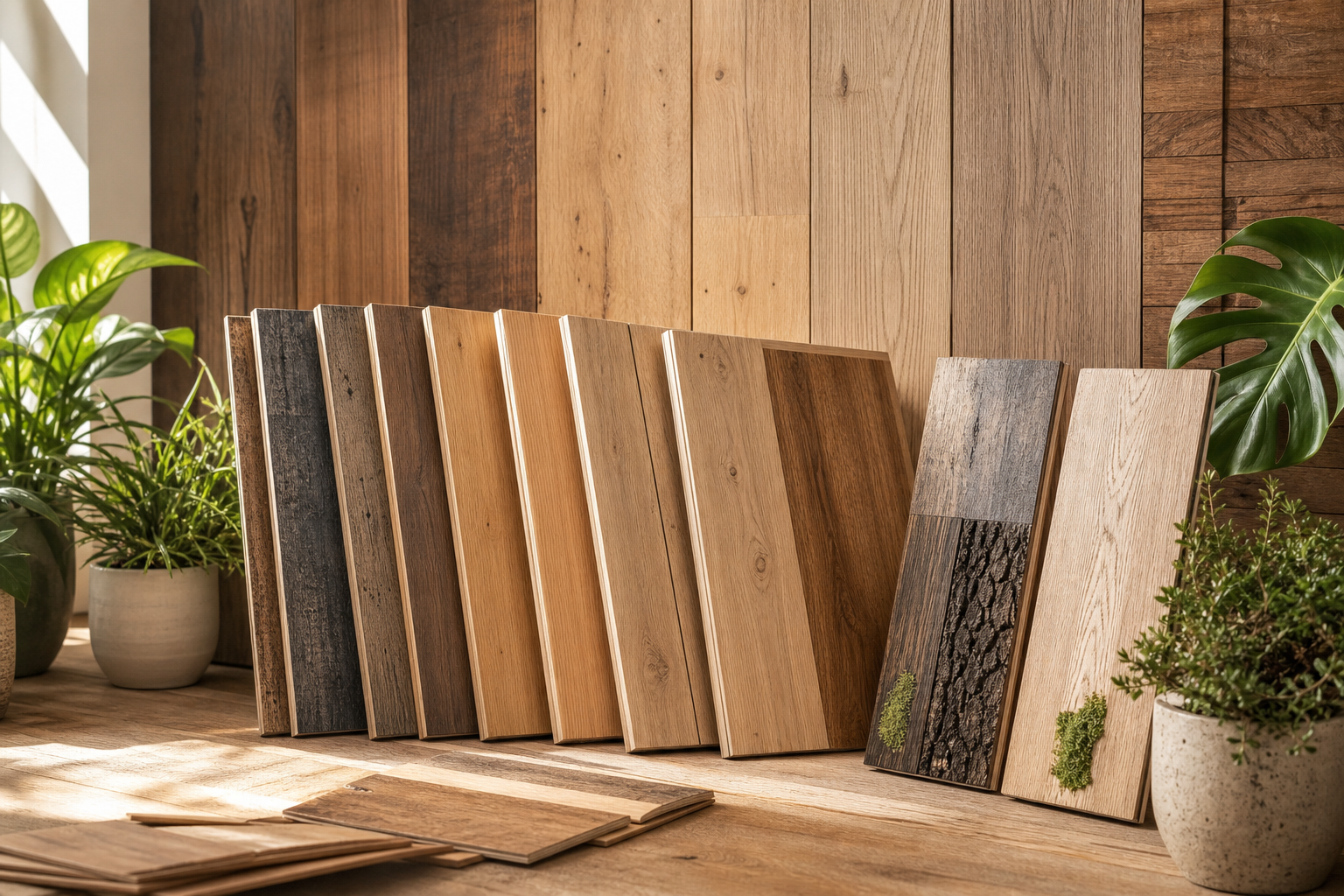
Plenty of Colorado Springs shoppers walk into our stores assuming sustainable hardwood means softer wood, higher prices, or a floor that will struggle once the heat runs all winter. I do not see it that way. The most eco-friendly hardwood flooring is usually the option that combines responsible sourcing, low-emission materials, and the kind of durability that actually holds up in Colorado Springs, from dry January air to slushy entryways near Garden of the Gods and Briargate.
The most eco-friendly hardwood flooring options are reclaimed wood, FSC-certified solid hardwood, and well-made engineered hardwood from responsibly managed sources with low-emission finishes. The right choice depends on verified sourcing, indoor air quality, and how well the floor will last in Colorado Springs' dry climate without failing early or needing premature replacement.
What are the most eco-friendly hardwood flooring options?
The most eco-friendly hardwood flooring options are reclaimed hardwood, FSC-certified hardwood, and some engineered wood floors made with responsibly sourced wood and documented low-emission adhesives or finishes. If you are comparing sustainable wood flooring in a showroom, start with proof of origin and expected service life, not just the word "green" on a display card.
Here is how I tell buyers to sort the field:
- Reclaimed hardwood. This reuses existing lumber from older buildings or structures and avoids cutting new trees for that flooring project.
- FSC-certified hardwood. Certification from the Forest Stewardship Council helps verify responsible forest management and chain-of-custody tracking.
- Responsibly sourced engineered hardwood. A good engineered floor can use less slow-growth hardwood in the wear layer and still deliver long life, especially where climate stability matters.
- Domestic species with traceable sourcing. Oak, maple, and hickory with clear documentation can be a smarter buy than imported products with vague origin claims.
Two floors can look nearly identical in a sample rack and have very different sustainability stories. I have seen one oak product with clear sourcing paperwork, FloorScore documentation, and a stable engineered build, and another with almost no usable information beyond color and plank size. Same look, very different confidence level.
Which labels help you identify responsibly sourced hardwood?
The labels that matter most are the ones tied to forest management, indoor air quality, and transparent manufacturing. Responsibly sourced hardwood should come with something you can verify, not just language like "earth friendly," "natural," or "better for the planet."
The certifications and signals I pay attention to are:
- FSC certification. This is still one of the clearest markers for responsibly managed forests and traceable sourcing.
- FloorScore certification. Helpful for indoor air emissions, especially on engineered products, finishes, and adhesives.
- CARB compliance. Relevant for composite core materials and formaldehyde emissions, especially in engineered hardwood.
- Manufacturer transparency. Some mills publish species origin, core construction, and finish chemistry even when third-party labels are limited.
A weak example is a carton that says "sustainable hardwood" with no backup. A stronger example is a specification sheet listing FSC-certified content, FloorScore certification, and finish details. I trust the second one because it gives me something concrete to check.
Common showroom mistake
Buyers often assume all wood flooring is automatically sustainable because wood is a natural material. That misses the real issues. Source forest, manufacturing, finish chemistry, installation suitability, and lifespan in your house matter just as much as the species itself.
Why does durability matter so much in sustainable hardwood flooring?
Durability matters because a longer-lasting floor usually means fewer replacement materials, less transportation, less packaging, and less waste over time. Eco-friendly hardwood flooring is not only about how the tree was harvested. It is also about whether the floor still performs 15 or 25 years later in a real household.
The National Wood Flooring Association continues to emphasize that real wood floors can last for decades and may often be refinished instead of replaced. That refinishing potential is one reason hardwood can make environmental sense when the product and installation are chosen well.
In Colorado Springs, I never separate durability from climate. Our altitude, winter heating season, low indoor humidity, intense sun, and tracked-in snowmelt can expose weak construction in a hurry. A floor that shrinks excessively, gaps badly, or fails over a dry winter is not a sustainable choice, no matter what the marketing says.
Most businesses and most buyers do not have an information problem here. They have a comparison problem. They are looking at five good-looking samples and nobody is explaining which one is most likely to stay put in a Colorado house.
That is why I often steer people to compare engineered vs. solid hardwood for Colorado Springs' dry climate before they settle on a product. In some homes, solid hardwood is the right call. In others, engineered is the more durable and more responsible choice because it is less likely to move around with seasonal dryness.
Colorado Springs homes near Monument, Falcon, and the north side often get especially dry indoors during heating season. It is common for indoor relative humidity to drop sharply in winter, which is one reason wider planks and lower-grade construction can show more movement here than buyers expect from a sample board in July.
What should Colorado Springs buyers compare in the showroom?
Colorado Springs buyers should compare construction, wear layer or total wood thickness, species hardness, finish system, board width, refinishing potential, and installation requirements. If you want sustainable wood flooring that also lasts, the best showroom conversation is specific and a little unglamorous.
Use this checklist while you compare products:
Showroom checklist for eco-friendly hardwood flooring
- Ask where the wood was sourced and whether it is FSC-certified.
- Check for FloorScore or other indoor air quality documentation.
- Confirm the wear layer thickness on engineered hardwood.
- Ask how many times the floor can realistically be refinished, if any.
- Compare species for dent resistance. Oak, hickory, and maple do not wear the same.
- Review the finish type and what maintenance it actually needs.
- Ask how the product performs in dry climates and over concrete or radiant heat, if that applies.
- Verify installation method, acclimation requirements, and subfloor prep.
- Compare installed cost per square foot, not just carton price.
Board width deserves more attention than it gets. Wider planks can look great, but the construction has to support them in our climate. Our guide on why board width and wood species matter for hardwood longevity in Colorado Springs breaks that down in more detail.
If you are putting hardwood on or near concrete, do not skip the subfloor conversation. Moisture testing is one of those boring details that can save a floor. We cover that in why concrete moisture testing matters before new basement flooring in Colorado Springs.
And if your biggest worry is dogs, kids, and tracked-in winter grit, it helps to think beyond the wood species alone. We also explain maintenance realities in hardwood floor cleaning in Colorado Springs.
Myth: The hardest wood species is automatically the most sustainable hardwood.
Reality: Hardness is only one factor. The better choice may be a responsibly sourced oak or engineered product that is more stable in Colorado Springs, easier to maintain, and more likely to stay in service longer.
Is engineered hardwood or solid hardwood the better sustainable choice?
Engineered hardwood can be the better sustainable choice in some homes, and solid hardwood can be the better choice in others. The honest answer depends on climate fit, refinishing potential, material efficiency, core composition, and how likely the floor is to last without major problems.
Solid hardwood has clear advantages:
- Long service life
- More refinishing potential over time
- Simpler composition with no plywood or HDF core
Engineered hardwood has strong advantages too:
- Better dimensional stability in many Colorado homes
- Efficient use of premium hardwood in the top layer
- Good fit for concrete subfloors and some remodel conditions where solid is less practical
I usually tell shoppers to compare failure risk as closely as they compare environmental claims. A floor that looks greener on paper but is more likely to move, gap, or fail in your house is not the better buy.
For buyers weighing those tradeoffs, I also recommend looking at prefinished or site-finished hardwood for Colorado homes. Finish system, site conditions, and how the floor is built all connect back to long-term sustainability.
John Hughes's Insights
I have been doing this work for more than 40 years, and I can tell you the most sustainable floor is not always the one with the prettiest sales story. Around here, I have watched families pay extra for a label and still end up disappointed because nobody talked honestly about dryness, sunlight, pets, or the way the house was built. That is backwards.
My rule is simple. First, find out where the wood came from. Second, find out how it is built. Third, decide whether it belongs in your house, not some imaginary perfect house. If I cannot get a straight answer from a rep on those first two points, I get cautious fast. And if a floor is not right for a Colorado Springs home, I would rather say that up front than watch a customer pay twice later.
How do you avoid green marketing and compare sustainable hardwood honestly?
You avoid green marketing by asking for measurable facts and by comparing two products side by side on the same decision points. Sustainable hardwood should stand up to plain questions about sourcing, emissions, construction, and installation. If it does not, I would keep looking.
Ask these direct questions:
- Is this responsibly sourced hardwood backed by FSC or another recognized standard?
- What indoor air quality certification does it carry?
- What is the wear layer thickness, or total solid wood thickness?
- How has this floor performed in dry Colorado homes?
- Can it be refinished, and how many times realistically?
- What finish is on it, and what maintenance does that finish require?
- Who is installing it, and what acclimation and moisture testing steps are included?
Installation still gets overlooked too often. I have seen good products let down by rushed prep work or weak moisture checks. That is why I push homeowners to review how to tell if a flooring installer will do the job right before you sign a contract. A sustainable product installed badly is still a bad result.
If you want to compare products in person, you can also start with the hardwood options and estimate process on our main website. Getting the measure, subfloor, and room conditions right is part of the sustainability conversation, even if it is less exciting than picking a stain color.
"The customer always comes first. If a floor is not right for your house, your budget, or your lifestyle, it is my job to say that plainly." John Hughes
Frequently Asked Questions
Is reclaimed wood always the best eco-friendly hardwood flooring option?
Not always. Reclaimed wood can be an excellent environmental choice because it reuses existing material, but milling quality, finish products, availability, and installation demands still matter.
Does responsibly sourced hardwood mean it will last longer?
Not by itself. Responsibly sourced hardwood addresses origin and forestry practices. Durability still depends on species, construction, finish, installation quality, and whether the floor fits Colorado Springs conditions.
What is the best sustainable wood flooring for homes with dogs and kids?
Many busy households do well with white oak, hickory, or a stable engineered hardwood with a strong factory finish. The best choice depends on traffic, moisture exposure, and how much wear you are willing to see between maintenance cycles.
Is engineered hardwood considered sustainable wood flooring?
Yes, it can be. Engineered hardwood may use less premium hardwood and can perform better in dry or variable climates. The sustainable value depends on sourcing, core materials, emissions, and long-term performance.
Are low-VOC finishes and adhesives worth asking about?
Yes. They matter for indoor air quality, especially right after installation. Ask for certification or product documentation instead of relying on a verbal promise.
Can sustainable hardwood work over concrete or in a basement-level space?
Sometimes, yes. Engineered hardwood is often the better candidate over concrete, but moisture testing and subfloor conditions are critical before you commit.
Need help comparing sustainable hardwood without getting lost in the labels?
If you are trying to choose eco-friendly hardwood flooring that is responsibly sourced and built to last in Colorado Springs, come see us at O'Briens Carpet One Floor & Home. We will help you compare certifications, construction, climate fit, and installed cost so you can make a decision based on facts, not showroom slogans.
Request your free estimate or visit one of our Colorado Springs stores