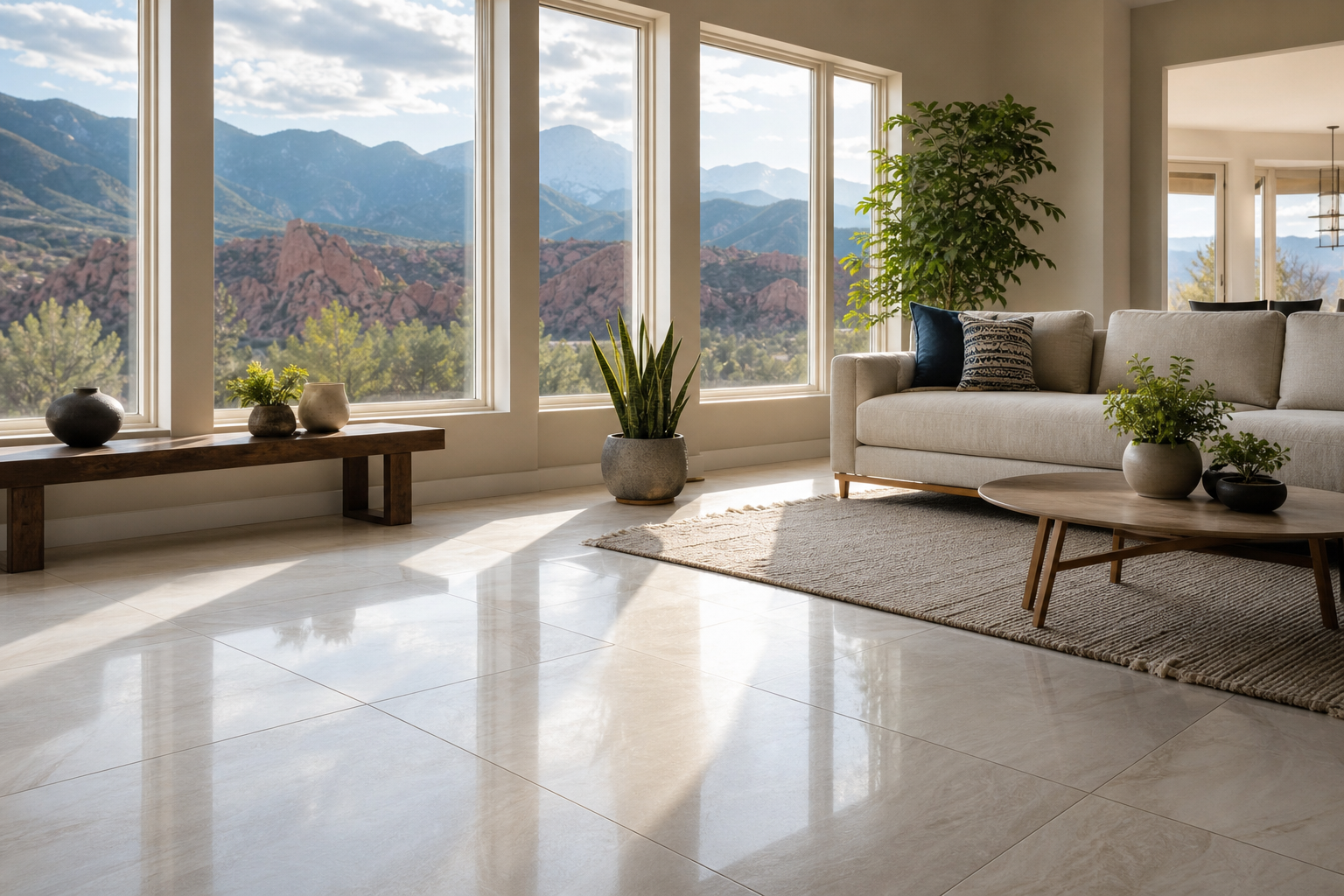
In Colorado Springs, summer heat usually shows up first in the rooms with big west windows, dark afternoon sun, and floors that seem to hold warmth long after the air conditioner kicks on. Yes, tile can help your home feel cooler in summer, especially under bare feet, but the best result comes from putting the right tile in the right rooms, not just replacing every floor with a hard surface.
Porcelain tile is usually the best answer if you want the coolest tile flooring for summer. Ceramic is a strong second choice, and some natural stone can also feel cool underfoot. In Colorado Springs homes, tile helps most by feeling cooler than carpet and pairing well with sunny kitchens, bathrooms, entries, and other rooms that heat up in afternoon sun.
Which tiles are best for keeping my home cool?
Porcelain tile is the best all-around choice for keeping a home cooler-feeling, with ceramic close behind and natural stone working well in selected spaces. If you are comparing the coolest tile flooring for summer, focus on material density, durability, maintenance, and how much direct sun that room gets.
Here is how I explain it on the sales floor:
- Porcelain tile. Dense, durable, and usually my first recommendation for Colorado Springs homes. It stays pleasantly cool underfoot, handles heavy traffic, and works well in kitchens, baths, and sunny main-floor spaces.
- Ceramic tile. Also a good cooling choice, often at a friendlier price. It can be a smart fit in lighter-use rooms or for homeowners balancing comfort and budget.
- Natural stone. Travertine, slate, and marble can feel wonderfully cool, but they ask more of you in sealing and upkeep.
Color matters less than most shoppers think. A lighter tile may look cooler visually, but inside the house, the bigger factors are sun exposure, room orientation, and the tile material itself.
If you are comparing room use as much as tile type, our guide on porcelain, ceramic, or natural stone for Colorado bathrooms and kitchens does a good job of breaking down the tradeoffs.
How does tile actually help a home feel cooler?
Tile helps by changing surface comfort and heat transfer, not by magically dropping the thermostat reading. It feels cooler because it pulls heat away from your feet faster than carpet does, and it does not trap warmth at the surface the same way padded flooring can.
That cool-underfoot effect is what most homeowners notice first. The U.S. Environmental Protection Agency explains that thermal comfort is influenced by more than air temperature alone. Surface temperature and radiant heat matter too. That lines up with what we see every summer. Two rooms can read the same on the thermostat and still feel very different.
There are three practical reasons tile earns its reputation:
- It conducts heat efficiently. Bare feet feel cooler faster on tile than on carpet.
- It does not insulate the surface the same way soft flooring does. You feel the cooler slab or subfloor beneath more directly.
- It works with thermal mass. In a home with decent shade and ventilation, tile can help moderate temperature swings through the day.
I do not oversell this. Tile can absolutely make a room feel more comfortable in July, but it will not rescue a west-facing room with unshaded glass and poor insulation.
Here in Colorado Springs, our elevation and dry air make sunlight feel intense even when the forecast does not look extreme. Colorado Springs averages about 243 sunny days per year, according to BestPlaces. That is one reason homeowners in Briargate, Rockrimmon, and Fountain often notice a big difference between a shaded north-facing room and a west-facing living area with large windows.
Which rooms in a Colorado Springs home benefit most from tile in summer?
Kitchens, bathrooms, entries, laundry rooms, and sunny main-floor living areas usually benefit the most from tile in summer. Those are the spaces where heat, foot traffic, moisture, and daily wear all come together, and where cool-underfoot comfort is easiest to notice.
The best spots usually include:
- Kitchens. Cooking heat plus foot traffic makes tile a practical choice.
- Bathrooms. Cool in summer, water-friendly all year.
- Entries and mudrooms. Good for dust, grit, and the occasional wet shoe after a summer storm.
- Sunny living areas. Especially rooms with south or west exposure.
A weak way to decide is this: “I want the coolest tile flooring for summer, so I should tile the whole house.” A stronger way is this: “I want cooler-feeling floors where my family actually notices them, especially in sunny traffic zones.” That usually produces a better result for the money.
If you are weighing comfort against softness in family spaces, our article on LVP or carpet for family rooms in Colorado Springs households can help you think room by room instead of forcing one answer on the whole house.
Common mistake: treating every room the same
A hot kitchen in July, an upstairs bedroom over a garage, and a shaded basement do not need the same flooring answer. I have seen plenty of people spend too much trying to make one product solve every problem in the house. That is usually where frustration starts.
Does room orientation matter more than tile choice?
Yes, room orientation can matter just as much as the tile itself. A west-facing room with heavy afternoon sun may still warm up noticeably with tile, while a shaded north-facing room can feel comfortable with almost any hard surface.
In Colorado, sunlight is no joke. The National Renewable Energy Laboratory has long documented Colorado's strong solar resource, which is great for natural light but also means heat gain can build fast in the wrong room at the wrong time of day.
- South-facing rooms. Bright all day. Tile helps, but window coverings still matter.
- West-facing rooms. Usually the hardest rooms in summer because late-day sun hits when outdoor temperatures are already up.
- North-facing rooms. Often more stable and naturally comfortable.
- East-facing rooms. Morning sun is usually easier to manage than afternoon sun.
John Hughes puts it plainly: “Sun beats flooring every time if the glass is doing all the work.” That is not a sales line. It is just the truth.
If you are installing tile over a basement slab or concrete area, prep matters as much as the surface. Our article on why concrete moisture testing matters before new basement flooring in Colorado Springs explains why that step should never be skipped.
Will tile lower my cooling bills?
Tile may help support a cooler-feeling house, but you should expect comfort benefits first and utility savings second. In most Colorado Springs homes, any bill reduction from tile alone is likely to be modest.
Cooling costs usually depend much more on:
- Window quality and shading
- Insulation levels
- Air sealing
- HVAC performance
- Ceiling fans and ventilation habits
- Roof exposure and room orientation
Where tile helps is in the full picture. If you close blinds before late-afternoon sun, use ventilation wisely in cooler evening hours, and avoid trapping heat in heavily padded surfaces, tile can contribute to a more comfortable home. Most businesses do not have a product problem, they have a matching-the-product-to-the-room problem. Flooring is no different.
Myth: Installing tile will significantly cut my summer energy bills by itself.
Reality: Tile mostly changes how the room feels underfoot and how the floor handles heat. It can be part of a cooler home, but windows, insulation, and HVAC do more to change actual cooling costs.
What practical tradeoffs should I think about before choosing tile?
Tile is excellent for summer comfort, but it does come with tradeoffs. The big ones are hardness, grout maintenance, sound, and the fact that a floor that feels great in July may feel chilly in January.
- Hardness underfoot. If you stand for long stretches in the kitchen, anti-fatigue mats may help.
- Grout care. Product choice and installation quality matter a lot.
- Area rugs. Good for comfort and style, but they reduce some of the cool-underfoot benefit.
- Noise. Tile reflects sound more than carpet.
- Winter comfort. Some homeowners love that cool feel year-round. Others do not.
If you have kids, dogs, and a lot of in-and-out traffic, tile is often a very sensible choice in the right zones. If softer areas still matter, that is where mixed flooring plans make sense. And if spills and messes are one reason you are moving away from carpet in certain rooms, O'Briens also has practical care resources like carpet stain removal guidance and this article on how to remove carpet stains without making them worse.
Before you buy tile for summer comfort, check these five things
- Which rooms get the hottest afternoon sun?
- Do you want that cooler feel all year, or mainly in summer?
- Will you cover large walking areas with rugs?
- Would porcelain's extra durability be worth the added cost?
- Has someone checked the subfloor or slab condition before installation?
Is tile a good year-round choice in Colorado Springs, including winter?
Yes, tile can be a very smart year-round choice in Colorado Springs if you place it thoughtfully. It feels cool in summer, and it also works extremely well with radiant heat if winter comfort is part of the plan.
That makes tile especially useful in:
- Bathrooms
- Basements
- Main-floor living spaces with radiant heat
- Entries that take snowmelt, grit, and salt in colder months
I have seen homeowners hesitate because they picture freezing floors in January. Fair concern. But if the home is well heated, or better yet if tile is paired with radiant heat, that concern is very manageable. In our climate, where a hot July afternoon can give way to a cold winter morning a few months later, flexibility matters more than trends.
John Hughes's Insights
I have been doing this work for more than 40 years, and I still think the best flooring advice starts with one simple question: how does this room actually behave in your house? I have seen older homes near Patty Jewett, newer builds in Falcon, and family homes off North Academy all need different answers, even when the homeowners walk in asking for the same thing.
If a kitchen gets blasted by late-day sun, tile can be a smart move. If a bedroom sits over a cold space and you hate cold feet, I am probably going to steer you another direction. I would rather tell someone the plain truth than sell a neat answer that does not fit real life. In my experience, homeowners make better decisions when they stop asking for the “best floor” in general and start asking for the best floor for that specific room.
Frequently Asked Questions
Is porcelain or ceramic better for a cooler home?
Porcelain is usually the better all-around pick because it is denser, tougher, and well suited to busy households. Ceramic can still be a good cooling choice, especially in lighter-use rooms or tighter budgets.
Does dark tile make a room hotter than light tile indoors?
Usually not in a major way for everyday comfort indoors. Material, direct sun, and room orientation matter more than color alone.
Should I put tile throughout the whole house for summer comfort?
Usually no. Most homeowners do better using tile where its cool feel and durability matter most, then choosing softer or quieter flooring for bedrooms and some living spaces. If you are also comparing hard-surface options, our article on where luxury vinyl plank makes the most sense in a busy home is worth a look.
Can tile work over concrete in a basement or lower level?
Yes, often very well, but moisture testing and proper prep matter first. That is especially true in Colorado Springs, where slab conditions can vary from house to house.
Is natural stone the coolest option?
Some stone floors feel great in summer, but they usually need more maintenance than porcelain. For most households, porcelain gives the better mix of cool feel, durability, and upkeep.
"The coolest floor on paper is not always the best floor in the room. I want customers to get the right result, not just the trendy answer." John Hughes
Get local help choosing the coolest tile flooring for summer
If this article helped you narrow down which tile will actually keep your Colorado Springs home feeling cooler, the next step is seeing the options in person. Visit one of our two Colorado Springs stores, at 111 E Garden of Gods Road or 6155 North Academy Boulevard, or request a free estimate through https://www.obrienscarpetone.com. We will help you compare porcelain, ceramic, and stone based on your rooms, your sun exposure, your subfloor, and your budget.
Visit the showroom or request your free estimate